Mission schools arrive: education in early Kisii
Esomero
Seventh-day Adventist missionaries opened the first schools in Gusii country from 1912 — and within a generation the Abagusii were among Kenya's most school-going communities.
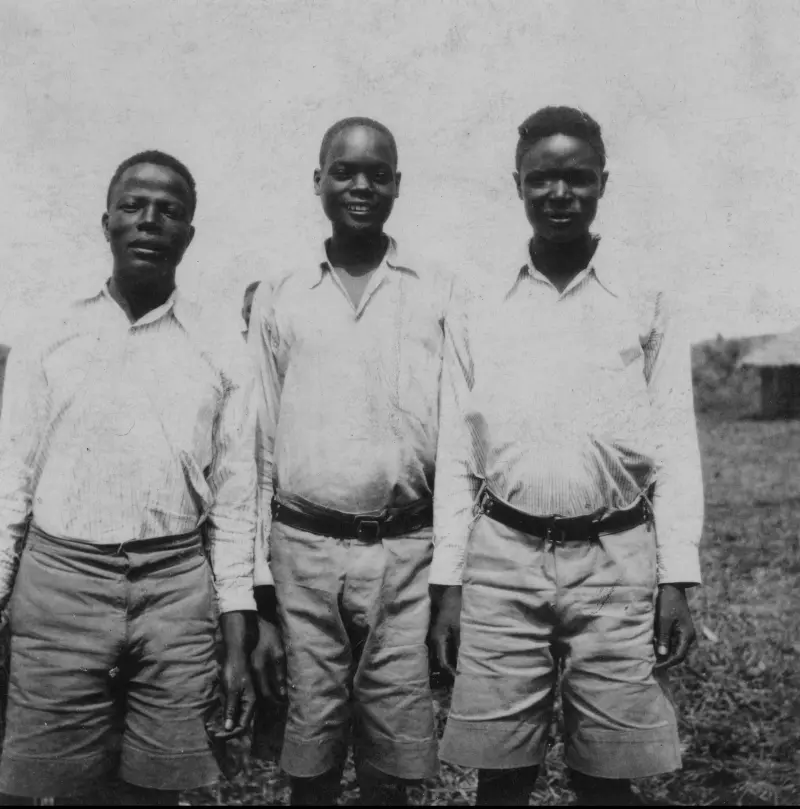
Formal schooling reached the Gusii highlands through mission stations in the early twentieth century. Seventh-day Adventist work began at Gendia in 1906–1912 under E. A. Beavon and Arthur Carscallen, and Catholic and other Protestant missions followed. The Adventist station photographed students at Kisii in the 1910s–20s — among the earliest images of schooling in the district.
Schools spread slowly at first: parents weighed the loss of herding and field labour against the new literacy. But the Abagusii embraced schooling with remarkable speed. By the 1930s the district supported notable institutions — Kisii School (founded 1934) chief among them — and Gusii graduates were staffing schools and offices far beyond the district.
The pattern set then still holds: the Gusii highlands remain among Kenya's most education-intensive regions, and remittances from educated children working in Nairobi and abroad are woven into the local economy. The archive photograph of mission-school students on this page captures the first generation of that transformation.
Related articles
Otenyo Nyamaterere: Gusii resistance to colonial rule
In the early 1900s the Gusii fought British colonial expansion. Otenyo Nyamaterere became the most famous resistance leader — and his execution in 1908 became a symbol of Gusii defiance.
Kisii under colonial administration
Hut tax, porterage, and the 1908 resistance — how colonial rule pressed into the Gusii highlands, and how local leaders negotiated it.
Learn this in person
Visit our centre or book a school programme in Kisii.