Omotereka (cultivation hoe)
omotereka
The broad-bladed iron hoe that turned the rich volcanic soil of the Gusii highlands — the single most important tool of the farming economy.
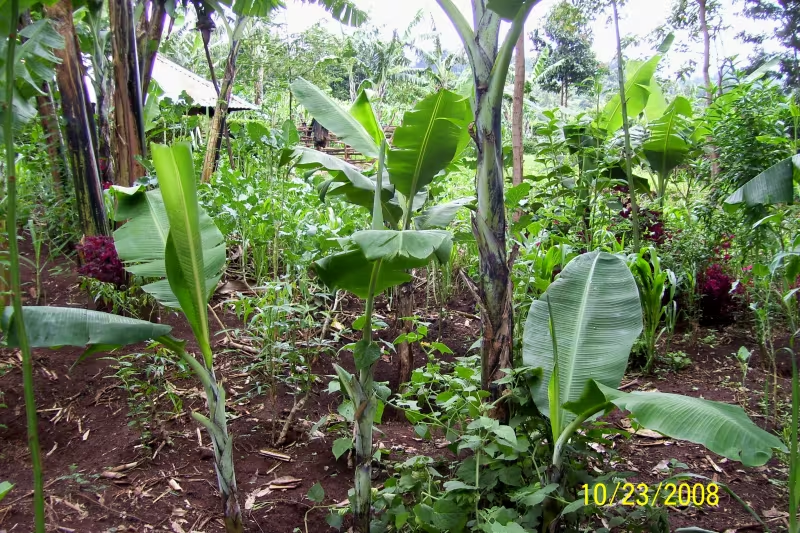
Short-handled, broad-bladed hoes of forged iron were the indispensable implements of Gusii agriculture, worked in short chopping strokes to break the highlands' heavy soils. The photograph shows the farming landscape the hoe shaped: densely intercropped fields of maize and beans outside Keroka.
Cultural context
The Abagusii were, above all, cultivators: densely settled hill farms grew finger millet and sorghum first, then maize and bananas, with women doing the greater share of field work. Iron hoes came from the forges of smith families who traded them for livestock, grain and labour.
Bridewealth negotiations counted hoes alongside spears and cattle; a good blade fed a household for a season and could be re-forged when worn thin. The intercropped field pattern in the photograph — maize, beans and bananas sharing one plot — is the same intensive system colonial observers described in the early twentieth century.