Sharing and solidarity: the ethic of working together
Obwatuka
Communal labour, shared feasts and the obligations of kinship — the cooperative ethic at the heart of Gusii community life.
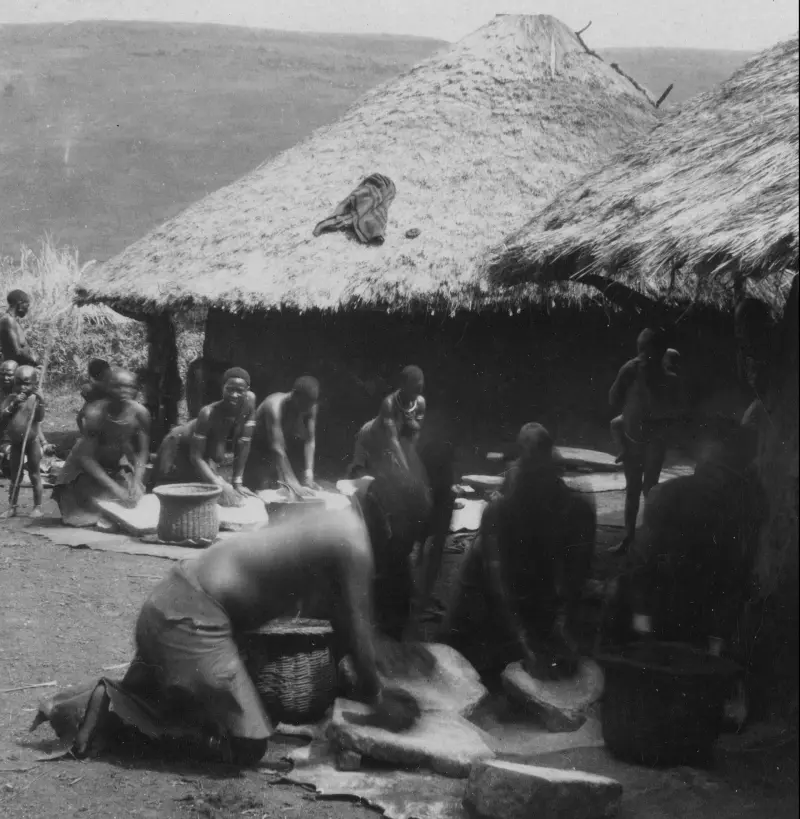
Gusii life was built on obligations owed and repaid. Heavy work — clearing land, weeding, harvesting, threshing, house-building — was communal: neighbours and kin gathered to work a field in turn, fed by the host, so that large tasks became social events. The photograph of women grinding grain together here captures that ethic: essential labour done in company, with song and conversation.
The same ethic structured feasting and gift-giving: cattle loaned to kin, food shared at ceremonies, contributions pooled for weddings, funerals and school fees. A person's standing rested not on what they kept but on how generously they gave — the miser was a figure of proverbs, not respect.
That ethic persists in modern forms: the harambee tradition of community fundraising, church groups and women's savings circles (chamas), and the expectation that the successful educate siblings and build at home. It is also the ethic on which our organisation itself runs — community-led, community-funded.
Related articles
Learn this in person
Visit our centre or book a school programme in Kisii.