Pottery, basketry and the crafts of daily life
Ebiomo bia mono mono
Beyond the famous soapstone — the clay pots, sisal baskets, iron tools and wooden vessels that clothed and equipped the homestead.
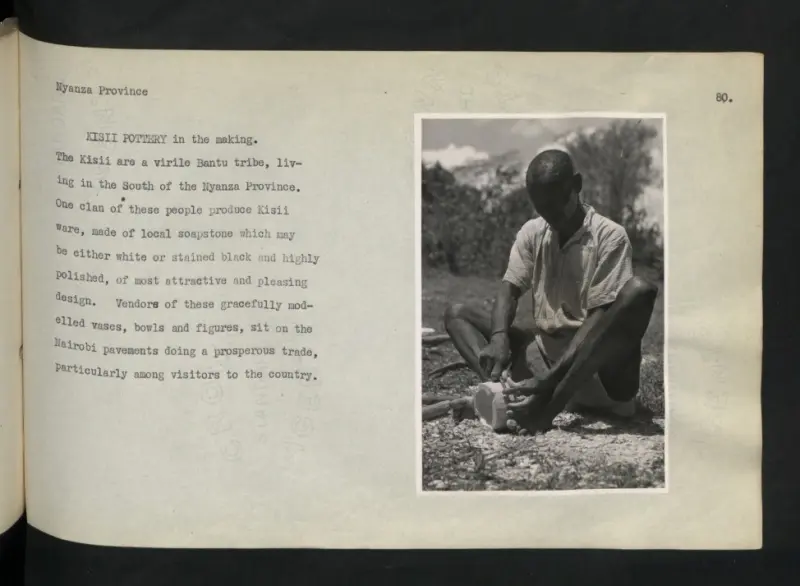
Tabaka soapstone made the region famous, but the Gusii homestead ran on a much wider craft economy. Potters — usually women of particular families — dug local clays and hand-built the cooking pots, water jars and storage vessels of daily life, firing them in open fires. A colonial-era photograph in the UK National Archives (shown here) captures a Kisii potter mid-formation.
Basketry clothed the household's storage and transport: granary baskets, winnowing trays, carrying baskets woven from sisal, papyrus and local fibres. Smiths — a hereditary and somewhat set-apart craft — forged the hoes, spears and billhooks that equipped farmers and warriors; carpenters carved stools, bowls, lyre bodies and the handles of hoes.
Many of these skills survive, adapted to the market: soapstone carving thrives as an export industry; basketry groups supply shops and orders; potters still make traditional forms where demand holds. The museum documents the objects and, increasingly, the makers themselves through our oral-history programme.
Related articles
Learn this in person
Visit our centre or book a school programme in Kisii.