Initiation: becoming omomura and omoseke
Ebunya
The passage from childhood to adulthood — the seclusion, instruction and celebration that made boys omomura and girls omoseke.
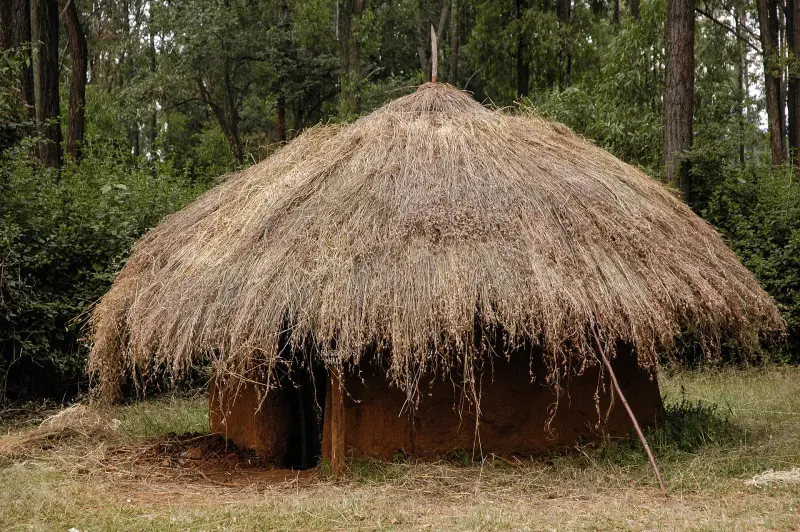
In Gusii tradition, children became marriageable adults through initiation — the transition boys made to omomura (young man/warrior) and girls to omoseke (young woman). The ceremonies clustered in seasons after harvest when food was plentiful, and whole cohorts of an age-set passed through together, forging the bonds that structured adult life.
Initiation combined physical ordeal with instruction: seclusion under the care of sponsors and elders, teaching on conduct, marriage, work and the community's history, and a return celebrated with feasting, song and new status. The new initiates emerged wearing regalia marking their changed standing — beads, skin garments and ornaments of the kind represented in our ceremonial collection.
Colonial-era and missionary pressure reshaped these practices through the twentieth century, and today the rites have changed greatly or fallen away in many families — replaced by school transitions and church milestones. Documenting what elders remember of the full ceremonies, respectfully and with their guidance, is a continuing priority of our oral-history programme. Some details are handled as sensitive knowledge rather than published openly.
Related articles
Learn this in person
Visit our centre or book a school programme in Kisii.