Clans, age-sets and the council of elders
Amanyange na ebimora
Gusii society ran without kings — through named exogamous clans, warrior age-sets, and councils of elders who judged disputes and blessed harvests.
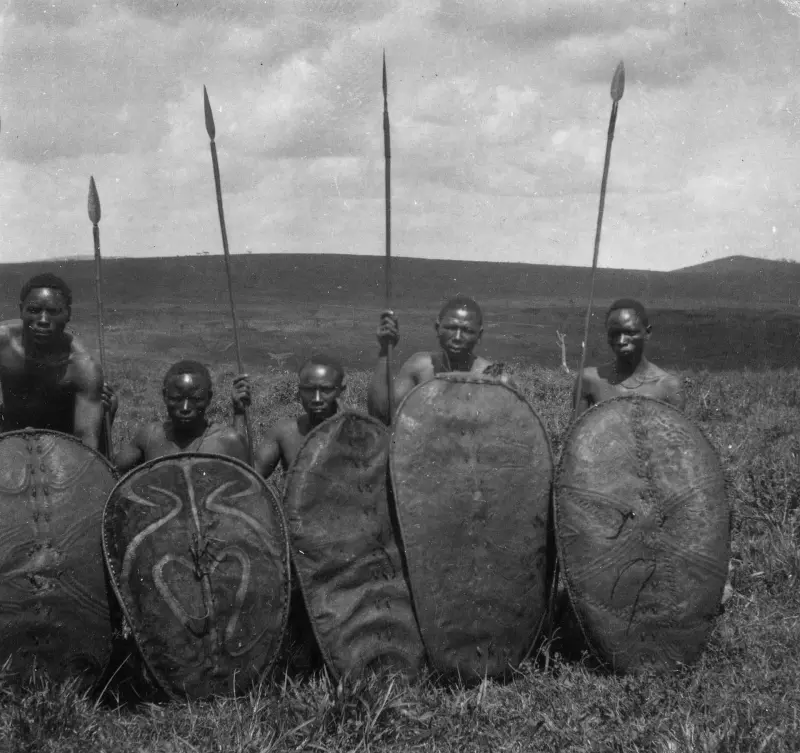
Gusii society was organised on three interlocking structures rather than central rulers. First, the clans (ematongo/emangi): named exogamous groups — Abagetutu, Abanyaribari, Abagichango, Abamachoge, Ababasi and others — each tracing descent from a remembered founder and holding recognised territory. A person's clan determined whom they could not marry and whose disputes were theirs to defend.
Second, the age-set system (ebimora): boys initiated together formed a named set that progressed through recognised stages — junior warriors (abamura) who herded, raided and guarded cattle, to elder status. The famous colonial photographs of Gusii warriors with ox-hide shields and spears show men of the warrior grade; the same generation later sat as elders.
Third, councils of elders (ebiagu/riama): senior men of the age-sets who judged disputes, apportioned land use, organised rituals and negotiated with outsiders — including the colonial officers who arrived in 1908. Decisions were consensual and slow; no single figure commanded the whole community. Understanding this structure explains how a society of perhaps a quarter-million people maintained order without chiefs — and why the British eventually appointed headmen of their own.
Learn this in person
Visit our centre or book a school programme in Kisii.